About Los Angeles StringWorks
About me:
James Yojo Kikuchi, AIA
MFA and MArch
Principal of Los Angeles StringWorks and IDA Studio.
I'm a licensed architect by profession and a dedicated luthier at heart. My journey began with undergraduate studies in fine art, which later led me to pursue graduate studies in architecture. From an early age, I've been deeply drawn to the world of arts and crafts—music, visual art, and the crafting environment have always inspired me. My connection to bass instruments started during college, where I became immersed in the world of double basses and bass guitars. Over the years, I've witnessed remarkable progress in bass performance, pedagogy, and the vibrant community of bassists.
The idea of designing new forms of bass instruments emerged from a simple observation: solo performers' challenges with the physical demands of traditional basses. I saw an opportunity to create smaller, lighter instruments that would make it easier to produce clear tones in the upper register while reducing the effort needed for rich, deep resonant sounds in the lower range. This vision continues to guide my work as both a designer and a craftsman.
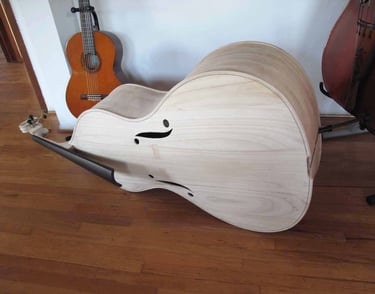
My first goal was to reduce the overall mass and weight of the instrument. To explore this idea, I designed and built an experimental bass called the Bassetto. I began by researching the lightest wood species suitable for instrument making and discovered Paulownia—a remarkably lightweight wood, comparable to balsa, yet strong enough to serve as a soundboard. Interestingly, I came to learn that Paulownia has been used for millennia in traditional string instruments across East Asia. To further lighten the weight, I simplified the instrument’s shape by removing the corners, inspired by early Italian corner-less basses, and abstracted the scroll. The final result was a 5/8-size, flat-back bass with reduced mass and a shorter vibrating string length. The experiment proved to be quite promising, offering a more manageable instrument without compromising tonal integrity.
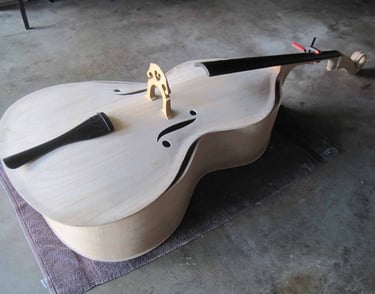
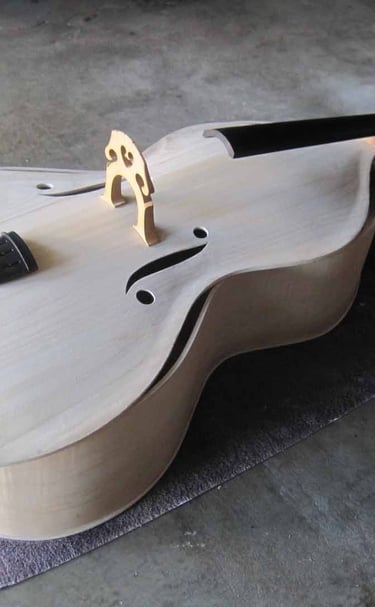
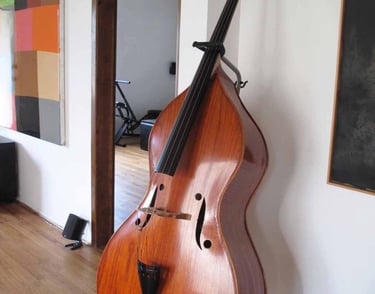
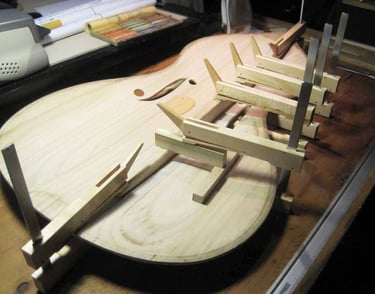
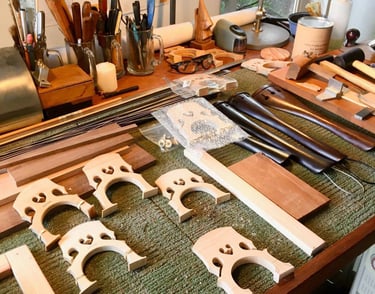
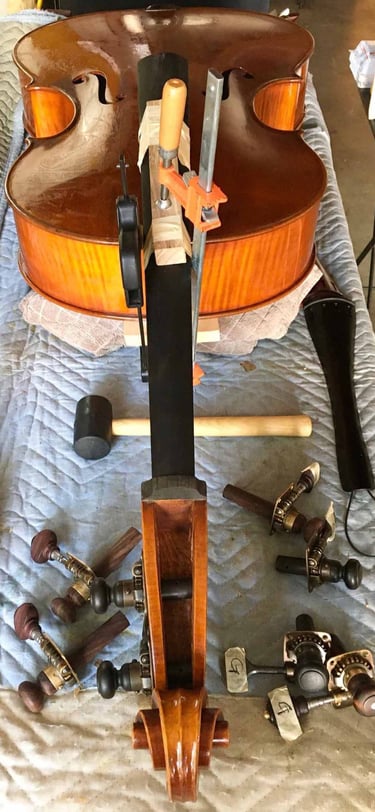
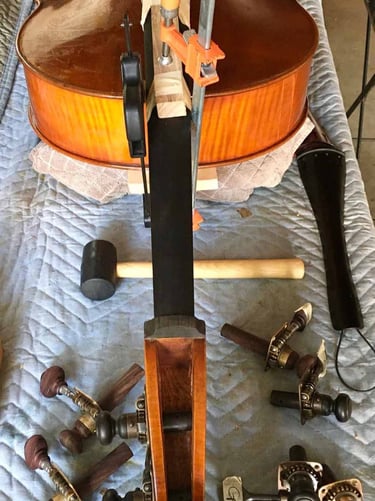
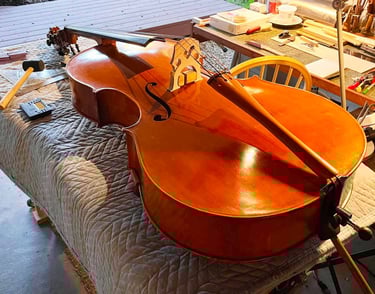
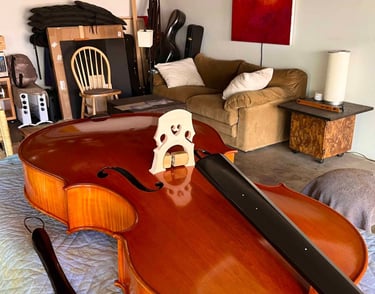
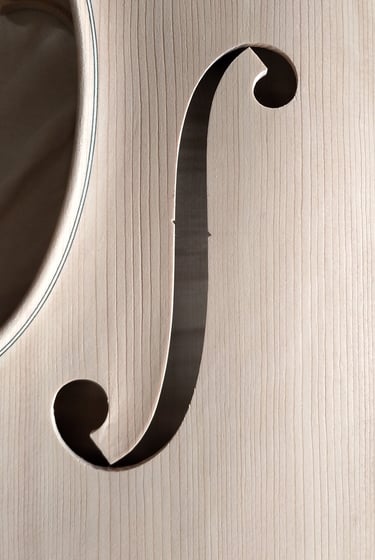
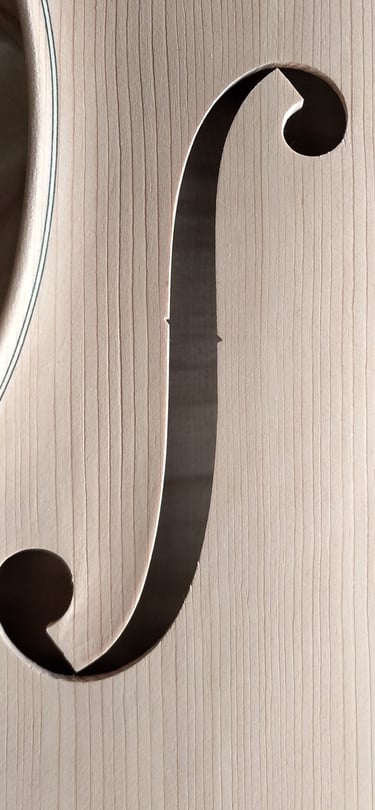
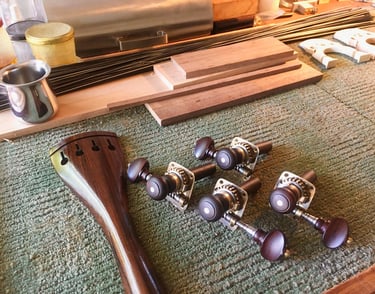
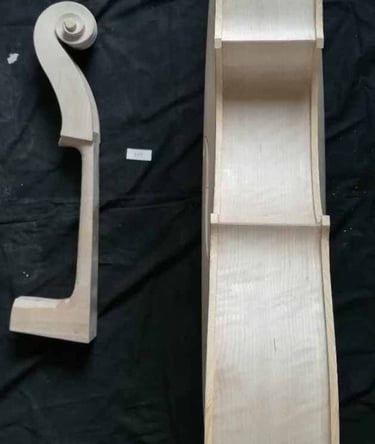
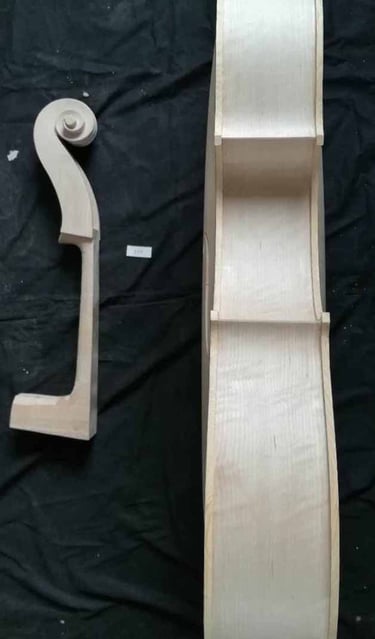
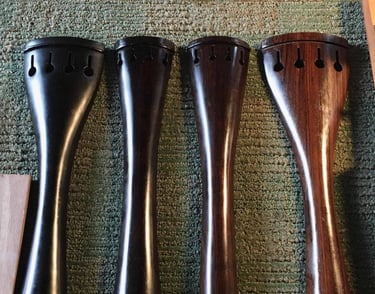
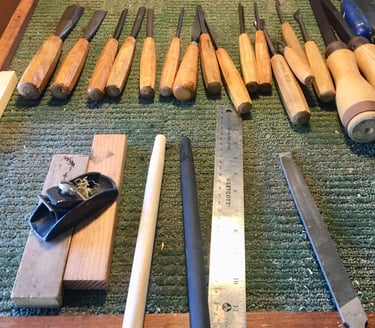
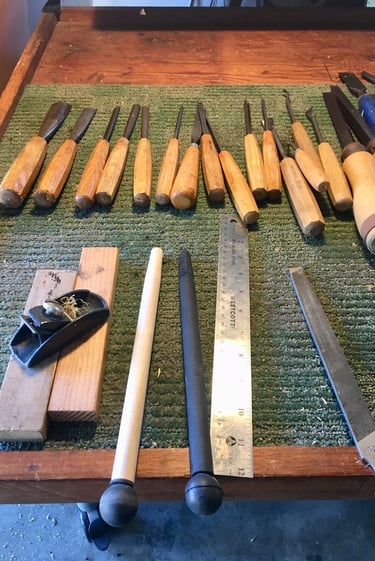
As my exploration of bass instrument design continued—especially with chamber music and solo performance in mind—I began searching for new directions. Chamber music should be understood not solely as classical repertoire but as any music presented in intimate contexts. That journey led me to the late master luthier Robert J. Spear of New York, whose work with the New Violin Family of instruments caught my attention. He had collaborated closely with Carleen Hutchins and was renowned for his deep knowledge, inventive spirit, and openness to unconventional ideas in instrument making. Working with Bob was transformative. His mentorship introduced me to the intricacies of instrument design and craftsmanship, and his creative approach helped shape my own thinking about how bass instruments could evolve to meet the nuanced demands of modern performances.
Bob had a vision for a compact chamber bass violin, and I was immediately captivated by the concept. He crafted the first prototype, which we named Bassettino—a Latin-inspired term meaning “little bass.” From that point on, we engaged in countless conversations and collaborative efforts to refine the instrument. Together, we worked through its dimensions, tonal volume, proportions, neck placement, harmonic response, and other essential design characteristics.
The Bassettino stands as the culmination of our long-term collaboration, and I believe it holds meaningful potential not only for bassists but perhaps for cellists as well. Though Bob has sadly passed away, I remain committed to continuing his legacy and advancing the instrument we shaped together. In this journey, I also connected with Patrick Tobin, one of Bob’s former associates. Patrick brings a wealth of expertise in stringed instruments and has offered insightful suggestions that continue to inform and enrich the development of the Bassettino.
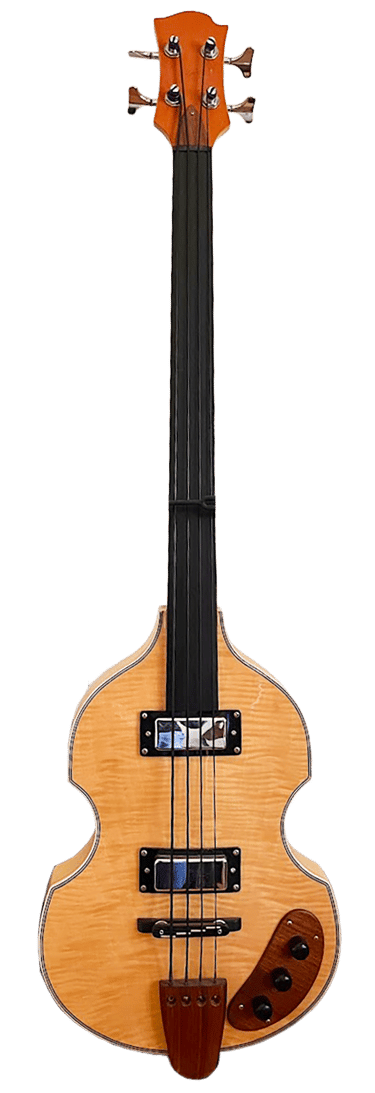
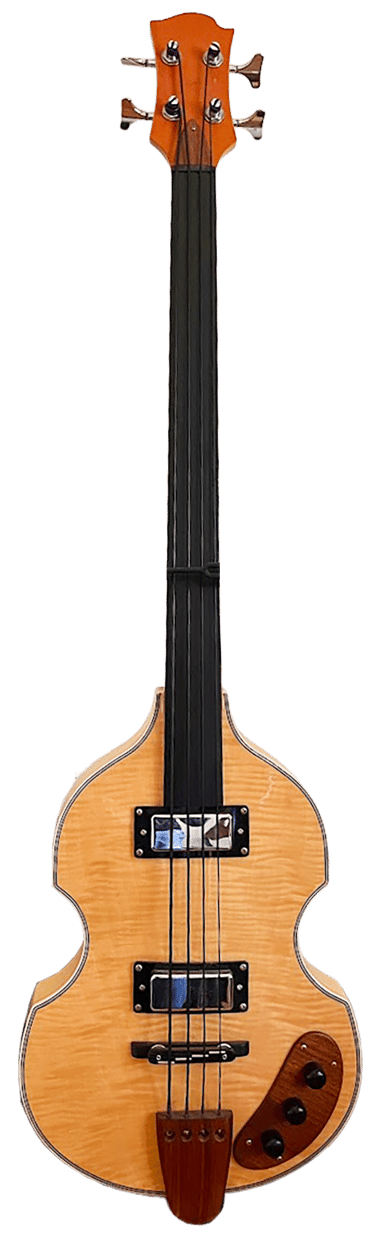
The Bassettino is a handcrafted instrument rooted in centuries-old violin-making traditions. As described on the Discover page, it’s tuned in fifths—fourth below the cello and two octaves below the violin. This tuning allows it to blend seamlessly with the rest of the string ensemble, making it an ideal choice for chamber music and solo repertoire. One of its unique strengths is its versatility: violin pieces can be played in their original keys, while cello works can be transposed a fourth lower without losing their intended resonance. For instance, Bach’s Cello Suites can be performed with the Bassettino by transposing the G Major Suite to D Major. The result preserves the cello’s expressive character while adding a deeper, more spiritual tone that resonates strongly with bassists. For many in the bass community, this discovery felt like a revelation—opening new possibilities for interpretation, expression, and ensemble integration—experience of a journey from Baroque to jazz and contemporary music, all in intimate and inviting settings.
Los Angeles StringWorks is currently the sole workshop producing the Bassettino, dedicated to advancing the evolution of bass instruments and expanding their role in contemporary music.
Feel free to call or text me at 310-923-0562 if you are interested or would like more information—I’d be happy to connect.
James,
For architectural design needs:
IDA Studio
Architecture and Urban Design
Los Angeles StringWorks
Custom hand-crafted Bassettino, and other unique instruments
Contact
inquiry
Calls or Texts are preferred, but you can also contact us by sending inquiry
310-923-0562
© 2025. All rights reserved.
Designed by
iDA studio